
- Sydney: +61457198551
- Hobart: +61429388905
- info@onepointeducationservices.com
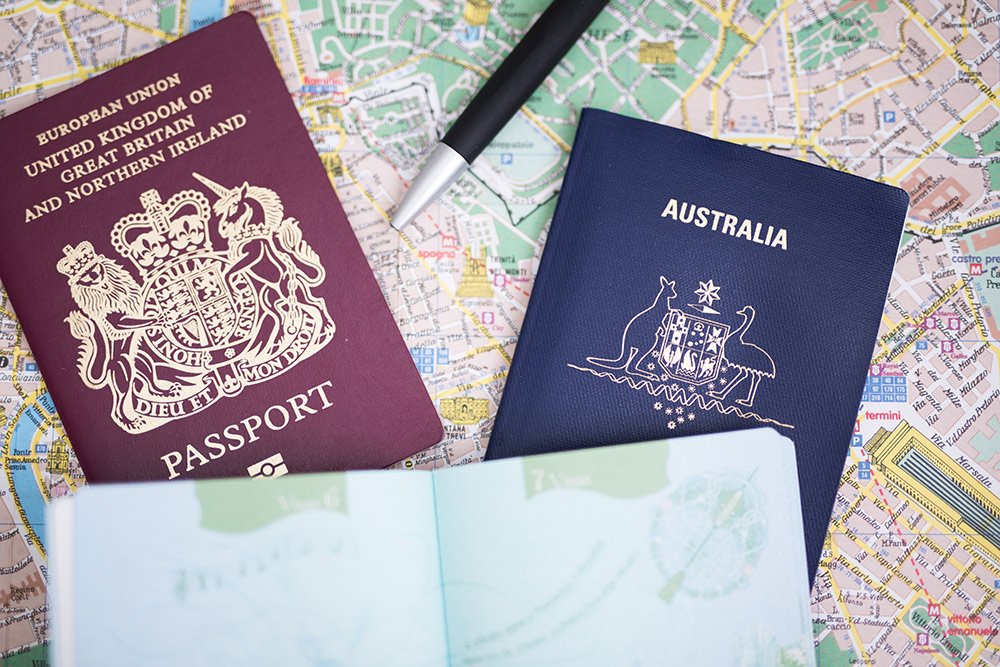
Below are the questions we are asked most often by students, families, and skilled professionals exploring their options for Australia. The answers reflect official Department of Home Affairs requirements as of May 2026. For personalised advice, please book a free consultation.
The current base application charge for the Student Visa (Subclass 500) is AUD $2,000, payable online via ImmiAccount at the time of lodgement. This fee was increased from AUD $1,600 on 1 July 2025. Additional costs may include biometrics, health examinations, and police clearances depending on your country of origin.
For 2026, the Department of Home Affairs requires international student visa applicants to demonstrate access to AUD $29,710 per year for living costs. This is in addition to your first year's tuition fees and return travel expenses. If you are bringing a partner or dependants, additional amounts apply: AUD $10,394 per year for a spouse or de facto partner; AUD $4,449 per dependent child; AUD $13,502 per school-aged child for school expenses.
The Genuine Student requirement replaced the former Genuine Temporary Entrant (GTE) criterion in late 2024. It requires you to demonstrate that your primary purpose for entering or remaining in Australia is to study. Rather than a long written statement, applicants now answer a structured series of questions about their study plans, financial situation, and ties to their home country. Honest, consistent, and well-evidenced answers are essential.
Yes. Student visa holders can generally work up to 48 hours per fortnight during the academic term, and unrestricted hours during official course breaks. Students enrolled in a Master's by Research or Doctoral degree have no work-hour restrictions.
Yes. You can include your spouse or de facto partner and dependent children as secondary applicants. Your partner may be permitted to work in Australia, with hour limits depending on your course level. Dependent children can attend Australian primary or secondary schools.
Yes. OSHC is a mandatory requirement for all Student Visa holders and must be valid for the entire duration of your visa. It must be purchased and confirmed before you lodge your visa application. There are five approved providers in Australia: Allianz Care, Bupa, CBHS International, Medibank, and nib.
The official minimum is 65 points across the General Skilled Migration (GSM) points test. However, competitive scores for popular occupations are often 80 to 95 points. Meeting the 65-point threshold allows you to submit an Expression of Interest (EOI) through SkillSelect, but does not guarantee an invitation to apply.
In the May 2026 Federal Budget, the Australian Government announced a complete redesign of the GSM points test — the first major rewrite since 2012. Public consultation begins in June 2026, draft legislation is expected by December 2026, and implementation is flagged for July 2026. The reform may affect age scoring, education weighting, English proficiency bands, partner points, regional study credits, and the 65-point minimum. We will update this page as official details are confirmed.
The three main GSM visas are: Subclass 189 (Skilled Independent) — points-tested only, no state nomination required, leads directly to permanent residency; Subclass 190 (Skilled Nominated) — requires nomination by an Australian state or territory, leads to permanent residency; Subclass 491 (Skilled Work Regional) — requires regional state nomination or family sponsorship, is provisional, and leads to permanent residency via Subclass 191 after meeting regional residence requirements.
Yes. All GSM applicants must obtain a positive skills assessment from the relevant Australian assessing authority for their nominated occupation before submitting an Expression of Interest. The assessing authority depends on your occupation — for example, ACS for IT roles, Engineers Australia for engineers, CPA Australia for accountants, and AHPRA for healthcare professionals.
Yes — but under the Education Services for Overseas Students (ESOS) Act, transfers between institutions are restricted in the first 6 months of your principal course unless certain exceptions apply (e.g. your provider has ceased the course, agrees to release you, or you can show genuine hardship). After 6 months, you are generally free to transfer, provided you obtain a new Confirmation of Enrolment (CoE) and update your visa accordingly.
Australian universities offer higher education degrees (Bachelor's, Master's, PhD) — typically theoretical and research-oriented. TAFE (Technical and Further Education) institutions and Registered Training Organisations (RTOs) offer vocational qualifications (Certificate III, IV, Diploma, Advanced Diploma) — practical and skills-based. Both can be pathways to permanent residency depending on the qualification and occupation.
The Professional Year Program (PYP) is a 44-week structured program available in Accounting, IT, and Engineering for international graduates of Australian degrees. It awards 5 additional points on the GSM points test and includes a 12-week supervised internship. For graduates with PR ambitions whose points score is close to a competitive threshold, the PYP is often a strategically valuable investment.
Total annual costs for an international student typically range from AUD $35,000 to AUD $75,000+, depending on the course and city. This includes tuition (AUD $20,000–$50,000 per year), living expenses (AUD $29,710+ per year), OSHC (AUD $600–$900 per year), and travel.
OnePoint's fees vary by destination and service. For Australian student visa cases, undergraduate consultancy is PKR 150,000 (split 75k advance + 75k pre-visa lodgement) and postgraduate is PKR 200,000 (split 100k + 100k). For the UK and Cyprus, the consultancy fee is PKR 80,000 (split 40k + 40k). These fees cover end-to-end support from course selection to visa lodgement. Please contact us for a written quote for your specific case.
Many Australian universities offer scholarships to high-performing international students, ranging from 10% to 50% tuition discounts. Some universities offer full scholarships to outstanding applicants. OnePoint maintains relationships with several institutions and can help you identify and apply for scholarships you may be eligible for.
Yes. OnePoint operates with MARA-registered migration agents in Australia. MARA (Migration Agents Registration Authority) regulates all migration agents in Australia, and only MARA-registered agents are legally permitted to give immigration assistance. You can verify any migration agent's registration at the official MARA website.
No. No legitimate migration agent or education consultancy in Australia can or should guarantee a visa outcome — visa decisions are made by the Department of Home Affairs based on independent assessment of each application. Any agency that guarantees a visa is making a promise it has no authority to keep. What we do guarantee is honest advice, thorough preparation, and full support throughout the process.
If your visa is refused, OnePoint will help you understand the reasons for the decision and assess your options — which may include a re-application, a different visa pathway, or in some cases an appeal to the Administrative Review Tribunal (ART). Refund policies vary by service and are documented in your client agreement.